A Story of Meaning & Hope
When our faith and beautiful way of Torah life becomes a path full of struggle, questions and answers that raises even more questions. Coming from a home and not given the space to learn, to grow, can be overwhelming.
ב"ה
A simple villager who lived deep in the countryside rarely had the chance to visit a synagogue. He had a young son who, due to a learning disability, had never learned to read a single word of Hebrew, nor did he know any of the standard holiday prayers. He didn't even know the letters of the alphabet. However, the boy possessed a small, hand-carved wooden flute that he loved dearly. He would sit in the fields for hours, playing melodies that expressed his thoughts and feelings to the world.
When Rosh Hashanah approached, the father decided it was time to take his son to the city to pray in the great synagogue of the Ba'al Shem Tov.
He hoped the atmosphere of the High Holy Days would inspire the boy. Before they left, the father firmly warned him: "You must stay very quiet in the synagogue. You cannot make a sound, and you absolutely must leave your flute at home. It is a holy day, and we do not play instruments.
The boy, wanting to be close to his favorite thing, secretly tucked the wooden flute into the inner pocket of his coat anyway.
During the morning service, the boy stood next to his father, completely bewildered. All around him, hundreds of people were crying out, swaying in deep devotion, and reading flawlessly from their prayer books. The boy felt deeply isolated and saddened that he could not understand or speak the words everyone else knew.
As the day went on, the heavy atmosphere of judgment and prayer grew more intense. The boy felt a powerful, burning desire to connect with God, but he had no words. He felt his chest tightening with emotion. He reached into his coat and felt the smooth wood of his flute.
During the concluding prayers, when the spiritual energy in the room reached its absolute peak, the boy could no longer contain the song inside his soul. He pulled out the flute, placed it to his lips, and blew a single, piercingly loud, beautiful note that echoed across the silent, crowded synagogue.
The congregation froze in utter shock. Some people began to whisper angrily, outraged that someone would break the solemnity of Rosh Hashanah by playing an instrument. The boy's father was mortified, covering his face in shame.
But the Ba'al Shem Tov stopped praying and turned around to face the congregation with a radiant smile on his face. He raised his hands to quiet the crowd.
"Do not be angry," the Baal Shem Tov said softly. "Throughout this entire day, I could feel that our prayers were struggling to break through the gates of heaven. There were barriers blocking our words. But this boy knows no prayers. All he has is his flute, and with that single note, he gave the entirety of his heart to God. His pure, wordless melody was so sincere that it shattered all the barriers. It carried all of our prayers up to the heavenly throne."
A personal prayer to HaShem can best be explained as having a dialoque with one of your parents or with a trusted friend. When we start davening that way, we are avoiding obstacles of not knowing what to say.
It doesn't need encouraging faith to talk to HaShem, unburden all your troubles, worries and fears and give them to HaShem. He gave us the ability to love, to feel, to hear, to listen and to share this with others, but also with Him.
HaShem is not just G-d, we are part of Him, the part that chosen right over wrong, good over bad, light over darkness. The Divine spark of our Nefesh HoElokis, which enables emunah and strength as part of our Jewish identity.
Tehillim are full of power and comparable to endless trust in HaShem. Emunah is needed for a person's full and speedy recovery. Not just the ones, but reciting it many times as needed.
" A little boy who's friend became ill, seriously ill and doctors had given up hope. The boy went home and started to recite Tehillim and when he finished he ran to this friends house to see if there was any improvement. When the tearful mother said no, he ran back home and said Tehillim for another hour and ran back to his friends house to see if there was any change, when the answer was again no, the boy ran back and forth that night. Until finally the parents of his friend informed him that the fever was gone and that his friend was sleeping peacefully to the road of recovery. "
We must not forget that HaShem is in control and with Tefiliah and Tehillim as wel as tezdakah, any Divine decree can be overturned. We should ask HaShem for all of our needs , especially when it comes to healing and good health, protection and emunah. Not only for ourselves but for others as well.

When Rabbi DovBer of Lubavitch was a young man, he lived in the same house as his father, Rabbi Schneur Zalman. Rabbi DovBer and his family lived in the ground floor apartment, and Rabbi Schneur Zalman lived on the second floor.
One night, while Rabbi DovBer was deeply engrossed in his studies, his youngest child fell out of his cradle. Rabbi DovBer heard nothing. But Rabbi Schneur Zalman, who was also immersed in study in his room on the second floor, heard the infant's cries. The Rebbe came downstairs, lifted the infant from the floor, soothed his tears, replaced him in the cradle, and rocked him to sleep. Rabbi DovBer remained oblivious throughout it all.
Later, Rabbi Schneur Zalman admonished his son: "No matter how lofty your involvements, you must never fail to hear the cry of a child."
The Lubavitcher Rebbe told this story to a gathering of community activists in 1962. "To me," said the Rebbe, "this story characterizes the approach of Chabad-Lubavitch. With all the emphasis on self-refinement and one's personal service of the Almighty, one must always hear the cry of a child.
"This is most applicable today, when so many Jewish children of all ages, have fallen out of the cradle of their heritage. Their souls cry out to us, and we must have the sensitivity to hear their cries and to respond. We must interrupt our prayers and our studies and do everything in our power to sooth these desperate souls and restore them to their cradle."
By Yanki Tauber
The Mishnah in Pirkei Avot (Chapter 4) teaches: “Rabbi Yose says: Whoever honours the Torah is himself honoured by people.” When a person recognises the intrinsic holiness of Torah and shows honour to the Torah and its תלמידי חכמים (talmidei chachamim — Torah scholars), Heaven ensures that honour is ultimately returned to him.
A moving incident illustrating this principle was published by Halacha Yomit.
Approximately one year before the story was shared, a man living in the New York area and his wife decided that they would spend Rosh Hashanah away from home in another city. His wife mentioned that she normally visited her parents’ graves every Erev Rosh Hashanah at a cemetery in nearby New Jersey, but since they would not be home, she hoped to visit sometime earlier during the month of Elul.
One day during Elul, while travelling through New Jersey, she suddenly remembered her wish to visit her parents’ graves. They therefore made a detour to the cemetery and stopped there for a short time of prayer and reflection.
As they were preparing to leave, the man noticed a small group gathered nearby. They called him over and explained that they were about to bury a deceased Jew who had no family and needed another man to complete a Minyan for Kaddish. Understanding the importance of such a mitzvah, especially during the Days of Mercy and Judgment, he immediately agreed while his wife waited nearby.
The members of the Chevra Kadisha recited Kaddish and lowered the deceased into the grave. However, to the man’s astonishment, the burial society then turned and began walking away without covering the grave with earth.
Shocked, he asked, “What are you doing? Why are you leaving the deceased uncovered?”
They replied that a tractor would soon arrive and complete the burial mechanically using its shovel.
The man was deeply disturbed. It seemed entirely inappropriate that a Jew should be buried in such a cold and impersonal manner. He therefore decided to remain and ensure the burial was completed properly.
Several minutes later, a small tractor driven by a non-Jew arrived. The man approached the driver and asked, “Would you mind lending me your shovel so I can cover the grave myself?”
The driver replied, “Of course. Take it and do whatever you wish.”
For the next half-hour, the man laboured alone, carefully covering the grave with earth by hand. When he finished, he placed the marker bearing the deceased’s name into the ground, as is customary, and quietly left.
When he rejoined his wife, both were overwhelmed by the strange sequence of events. They had never intended to visit the cemetery that day, yet somehow they had been led there to perform a final act of kindness for a complete stranger.
Several days later, the man telephoned one of his former rabbis from Yeshiva Ner Yisrael in Baltimore to wish him a Shana Tova. During their conversation, he mentioned the unusual incident and repeated the name of the deceased.
The rabbi immediately cried out in astonishment.
“When you were a young student in Yeshiva,” the rabbi explained, “your parents were unable or unwilling to pay your tuition. I approached a certain man and asked if he would help support your Torah learning. He agreed without hesitation and covered the cost of your years in Yeshiva. He never married and had no children. The name you just mentioned was that benefactor.”
The rabbi paused before continuing:
“It appears that Heaven did not wish for such a man to be buried in a degrading manner. You were granted the merit of repaying a portion of the kindness he once showed you by ensuring he received an honourable Jewish burial.”
One final clarification was later added to the account: although the story was originally published describing the individual as a rabbi, it was later confirmed that he was not a rabbi but an ordinary working man. Nevertheless, every other detail of the story was verified as entirely accurate.
This story reminds us that no act of kindness performed for Torah is ever forgotten. A person may believe that his generosity, sacrifice, or quiet support has disappeared into history unnoticed. Yet Heaven keeps perfect account. Sometimes, years later, the opportunity is granted for honour to return full circle in ways no human being could ever arrange.
By Rami ben Ze'ev
A true story by Rebbe Nachman of Breslev, brought to us by Rabbi Lazer Brody, and gives us an important lesson about the obstacles in life. To overcome these obstacles is how we find HaShem, but there is this evil Inclination stopping us or at least trying the stop us from finding HaShem. Are we letting the evil inclination win, or do we overcome the obstacle?
When we free ourselves from these obstacles, we are able to serve HaShem with Simcha, Emunah and Bitachon.
Grand Rebbe, Yoel Teitelbaum Z"L
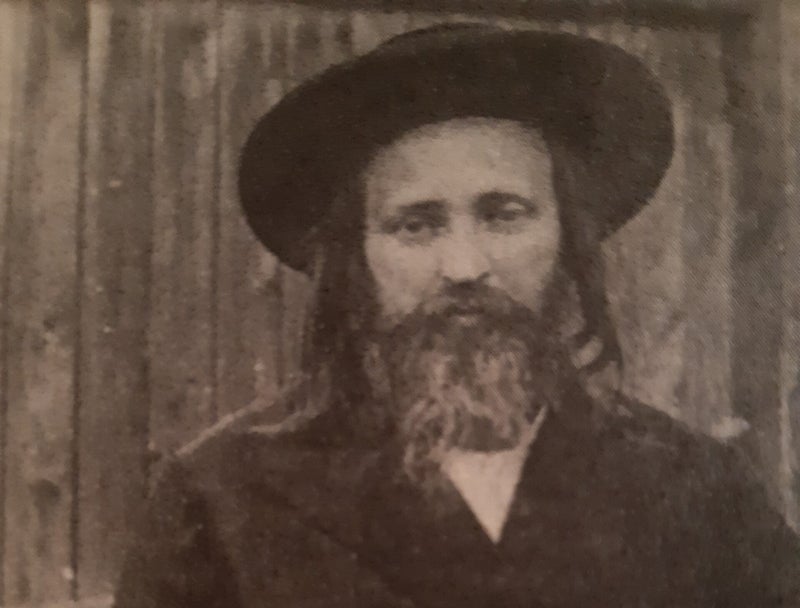
The world depends on three things, on Torah study, on serving HaShem, and on kind deeds.
In this Mishna nothings else matters, not even the social status of someone. We cannot pick and choose our chasadim. We cannot wait if the person of our type or our sect. The opportunity presents itself and we must not let it go to waste.
Not only the person depends on it, the whole world depents on it.
The Satmar Rebbe, R' Yoel Teitelbaum, once went to visit one of his chassidim in hospital. The Rebbe sat at the the man's side, giving him encouragement and hope. In the meantime, his gabbai excused himself, stepped out of the room, and did not return for a half- hour. By the time he returned, the Rebbe was prepared to leave. He wished the sick Chossid a refuah shlema and they left.
On the way back to Williamsburg, the Rebbe asked his gabbai where he had The gabbai explained, ' I stepped into the hallway with the intention of returning a minute or two later, but I heard someone moaning. I peeked into a room down the hall and saw a man who seemed down en dejected. I told him who I was and what I was doing there and how the Rebbe came to be mevaker choleh a chossid of his.
" The bedridden man let out a krechtz. ' Oy, that person is zo lucky that his Rebbe lives nearby. I am a Gerrer chossid and my Rebbe lives halfway across the world. If only he could sit by my bedside now! " I stayed at the fellow's bedside to give him chizuk, because his Rebbe was not there.
The Rebbe listend intently to the story. Then, although they had already arrived back in Williamsburg and the Rebbe had many other things to take care of, he asked to be driven back to the hosptial, so he could spend some time with the Gerrer chossid.
When they entered the man's room, the fellow could not believe it. The Satmar Rebbe had come to visit him! Little did he know that the Rebbe had actually made a special trip! The Rebbe told the Gerrer chossid stories and vertlach of hope, infusing him and cheered him up. One hour later after he arrived, Rebbe Yoel wished the chossid a refuah shlema and returned home.
If an opportunity for chesed, and act of kindness, presents itself, we must not let it go to waste. After all, the world depends upon it.


The story of a Jewish girl who chose faith over fear, and eternity over ephemeral riches of this world.
In the 19th century, on the eve of French domination in North Africa, Morocco was still a land where Jewish communities lived under dhimmi status — protected by the Sultan, yet subjected to social discrimination, strict regulations, and constant pressure to abandon their ancestral faith.
It was in this environment that lived Sulika Hachuel — also known in Judeo-Arabic as Solikha Hagoel — the daughter of Chaim and Simha, a 17-year-old Jewish girl born in 1817 (5577) in the Mellah, the Jewish quarter of Tangier. She was renowned throughout the city for both her extraordinary beauty and her Tzniut — modesty of heart and soul. Her beauty was so radiant, it was said to eclipse the very moon.
Yet beyond her physical grace, what made Sulika shine in the eyes of the Jewish community was her character — her kindness, generosity, and devotion to others. Her father Chaim, a merchant by trade and a learned man of Torah, often welcomed scholars and students into their home for Talmudic study.
But Chaim, aware of the dangers posed by his daughter’s beauty in a society hostile to Jews, would often caution her:
“My daughter, stay home. Outside, not all men have good intentions.”
And Sulika, respectful and obedient, listened.
One day, while her father Chaim was giving a Talmud lesson and her mother Simha was occupied at home, Sulika, wanting to help them, stepped out to run a simple errand.
That brief moment of exposure changed everything.
As she walked through the streets of Tangier, a young man named Abdul Aziz caught sight of her. Captivated by the radiance of her face, he froze. Then, overwhelmed by desire, he ran to his father Mahmoud, a powerful and unscrupulous man in the city.
Father,” he exclaimed, “I saw a girl today. I must have her — no matter the cost.”
Mahmoud asked about the girl’s identity. When he heard she was Jewish, he scoffed.
“Impossible — she’s a Jew.”
But Abdul Aziz would not be deterred. His obsession grew stronger by the hour.
The next day, Mahmoud himself made his way into the narrow streets of the Mellah, the Jewish quarter. He stopped in front of Sulika’s house and knocked harshly on the door. Her father, Chaim, opened it and froze when he saw who stood before him. His heart raced, but he remained composed and offered courteously:
"Shalom… Would you care for a cup of tea?”
Mahmoud gave a bitter, mocking laugh, stepped confidently across the threshold, and declared in a cold voice:
“My son wants to marry your daughter.”
Chaim took a step back, stunned by the absurdity of the proposal.
“Are you joking? You’re Muslims — we’re Jews. This is madness!”
But Mahmoud remained unfazed. With grim clarity, he responded:
“That’s not a problem. She will convert — willingly or by force. Listen carefully:
1.Either your daughter marries my son,
2.Or you will regret it.”
And without waiting for a reply, Mahmoud turned and walked out.
Chaim stood in silence, shaken to the core. He knew there was no justice for Jews in that place, in that time. Powerless to protect his daughter through legal means, he acted swiftly — he took Sulika to his sister’s house to hide her.
But Mahmoud was already a step ahead.
He went to the local authorities and filed a report. Soon after, the authorities raided Chaim’s home, inspecting every room, shouting:
Where is she? Where’s the girl?”
Terrified, Chaim stammered:
“I don’t know… She ran away…
The authorities, unmoved, arrested Sulika’s mother Simha and threw her in prison. Their intent was clear: she would be used as a bargaining chip to force Sulika to return.
When Sulika heard the news, she was devastated.
“My mother? My mother is imprisoned because of me?”
Without hesitation, she rushed to the authorities and cried out:
“Why is my mother here? Let her go! If it’s me you seek — I am here.”
The authorities immediately seized her and locked her in prison.
A few days later, Sulika was brought before a court, accused of a crime she had not committed: apostasy from Islam.
Abdul Aziz, his father, and two false witnesses stood in court, waving a forged document. It falsely claimed that Sulika had converted to Islam — and had later renounced it. Her name was forged beneath it.
The judge, holding the paper, asked:
“Do you admit that you abandoned Islam?”
In 19th-century Morocco, apostasy was punishable by death.
But Sulika lifted her head with quiet dignity and replied:
“Me? Renounce my faith? Never. I am a Jew, and I will remain a Jew until my very last breath.”
The judge pointed to the signatures:
But your name is here. And there are two witnesses.”
Sulika denied everything. But the court, already in favor of Abdul Aziz, declared:
“Two witnesses testify against you. This document is therefore valid.
Return to Islam, or you will be condemned to death.
Think carefully. You have a few days."
But Sulika did not need days. Without blinking, she answered:
“I don’t need to think. My soul belongs to G‑d.
I will never bow before such injustice."
After her sentencing, Sulika was transferred to the royal prison of Fez. It was there that her story took yet another dark turn.
One evening, a man dressed in royal robes entered her cell. He was a prince, the son of the Sultan of Morocco. He had attended the trial and had also been captivated by Sulika’s radiant beauty.
He leaned toward her and spoke in a low voice:
“Sulika, listen to me. I am the Prince, son of the King of Morocco.
I can save you. You don’t have to die.
Become my wife and join my harem. I will give you everything: gold, jewels, power, a royal life.
You will be Queen.”
Sulika looked him straight in the eye.
You think you can buy me with your gold? Your riches and your power are nothing compared to the power of the Creator of the world.”
The prince’s pride was wounded. He clenched his fists.
“If you refuse… you will die a horrific death. This is your only chance.”
But Sulika remained unshaken. With deep Emunah — unwavering faith in G‑d — she replied:
Better a thousand painful deaths than a single betrayal of my G‑d.”
Humiliated, the prince left in anger. But he hadn’t given up. He went straight to the Grand Rabbi of Fez and threatened him:
“That girl is endangering your entire community.
Convince her to marry me, or all the Jews will suffer the consequences.”
The rabbi, his heart heavy, knew he had no choice. He went to visit Sulika in her cell.
There, he found her deep in prayer.
When she finished, he spoke:
“My daughter… the entire Jewish community is in danger.
The decrees that are being prepared could destroy us all…”
But Sulika furrowed her brow and asked:
What are you saying, Rabbi? That I should betray my faith?
Is that what our holy Torah teaches?”
The rabbi hesitated, then invoked the story of Queen Esther, who had married the Persian king to save her people.
But Sulika answered firmly:
“Esther hid her Jewish identity. But everyone knows I am a Jew.
If I accept this, I will profane the Name of G‑d and open the door for other Jewish girls to be blackmailed into forced conversions.
The decrees of men are nothing compared to the will of the Most High.
G‑d is my only Judge. My only King.
No non-Jew will lay a hand on me until my soul leaves this world.”
The rabbi left in tears, overwhelmed by the strength of this 17-year-old girl.
He returned to the prince and said:
“Your Highness… you are wasting your time.
This girl has an unshakable, ironclad faith.
Nothing can break her.”
The prince, humiliated for the third time, gave the final order:
Sulika was to be executed.
The day of her death, the entire city of Fez gathered. People filled the streets, curious and tense, as the young Jewish girl was brought forth in heavy chains. Yet she stood upright, proud, her dignity unshaken.
Suddenly, the prince stepped forward once more.
“Sulika,” he cried, “listen to me!
Let me save you. Come with me to the royal palace.
Become my wife — be Queen of Morocco!”
A murmur spread through the crowd.
All eyes turned to Sulika. This was her last chance.
But she looked at the prince with calm contempt.
“You still don’t understand who I am.
I will never be your wife.
You are nothing before G‑d.”
The prince turned red with rage.
“Then she will not die like an ordinary criminal!
I want her death to be a lesson — one all of Morocco will remember.
Tie her hair to the wildest horse in Fez.
Let the most ruthless rider drag her through the streets until she is dead.”
A heavy silence fell over the assembly.
Even the soldiers hesitated, disturbed by such cruelty.
But Sulika remained still, her eyes clear and steady.
Then she spoke:
“Before you carry out your sentence,
grant me one final request.
Bring me fifty strong pins.”
The executioner was baffled. Pins?
Most prisoners begged for food, for mercy, for a message to be sent to their families.
But Sulika asked for pins.
The request was granted.
The horse and rider were readied.
The pins were placed into Sulika’s hands.
She turned to the Jews present and spoke loudly :
My dear brothers and sisters, listen to me.
I am the princess of the King of Kings.
In my lifetime, no man has ever seen my arms or legs—
and no one will see them after my death.
My modesty belongs to HaShem.”
She whispered a prayer, then took a pin.
She pierced her dress, fastening it to her skin, so that it would not rise as she was dragged through the streets.
And with each pin, she cried out:
“Shema Yisrael, Adonai Eloheinu, Adonai Echad!”
She repeated this ritual until every part of her dress was secured.
The Jews burst into tears.
Even the Arab onlookers were struck silent.
They had never seen such strength of spirit.
Then, as soon as she finished, she was tied to the horse’s tail, and the rider cracked the reins.
The animal surged forward, dragging Sulika across the ground.
Each beat of the hooves rang like an echo of the sacrifice being offered.
Sulika closed her eyes, and her soul rose intact and luminous — victorious in its final struggle.
That day in Fez, Sulika did not merely die — she became a legend.
Even the executioner, deeply shaken by what he had witnessed, later converted to Judaism, convinced by the grandeur of Sulika’s soul and the holiness of her Mesirut Nefesh — her self-sacrifice.
Today, the name Sulika Hachuel, also known as Lalla Zuleikha, echoes throughout Jewish Morocco and beyond as the supreme embodiment of Emunah (faith), Tzniut (modesty), and unwavering loyalty to HaShem.
Her tomb in Fez has become a sacred site, a place of pilgrimage where Jews, Muslims, and even Christians come to pray, seek miracles, and find comfort.
It is said that whoever invokes her name with sincerity draws the Shekhinah — the Divine Presence — into their home.
Sulika Hachuel had countless opportunities to give in — to fear, to pressure, to the promise of riches and comfort.
But she chose eternity over the ephemeral, the world above over the world below, faithfulness to G‑d over the illusions of this world.
She is not merely a martyr.
She is a living echo, a voice that still whispers:
“Never give up on who you are — to remain oneself is the greatest victory.”
She died for HaShem.
Now it is up to us to live for Him.
In Hebrew:
The Tombstone of the Righteous Sulika Hachuel (Solikha Hagwal) A virgin girl who sanctified the Name of Heaven in publicly, and was killed a martyr for the sanctification of the Name in the city of Fez, may G-d protect her, on Shabbat.
The Righteous (HaTzadeket), [Year 5594]( Gregorian calendar 1834), and may her merit protect us. Amen, may it be His Will.
In French:
Here rests Miss Solica Hatchouel Born in Tangier in 1817 Assassinated in Fez in 1834 At the age of 17 For refusing to convert Torn from her family Mourned by all — this holy child.
She was born in Tangier in 1817 (5577/5578), and was martyred for the sanctification of the Name on a Shabbat day in Fez, in 1834 (5594). May her memory be a blessing.
By Katya 🌺

Tehillim means " Praises " and contains many praises and plea's to HaShem.
Most of the Tehillim was written by Dovid HaMelech, and around half of the Chapsters are " Mizmor L' Dovid." The sefer contains 150 perakim.
The Midrash tells us that when Dovid HaMelech composed the Tehillim, he had not only himself in mind, but every Jew and every circumstances. No matter what situation, the words of Tehillim speaks words from the heart. From neshama to neshama.
An amazing story by Reb Kalman Krohn z"L
One afternoon, the great Tzemach Tzedek of Lubavitch put on his overcoat and left his house alone, walking purposefully to his destination. The passersby in the street, noticing their revered rebbe walking alone, raised their eyes in astonishment. It was well known that the Tzemach Tzedek was always accompanied by his gabbai whenever he went someplace. It was strange to see him alone.
Curiously, they watched as the rebbe knocked on the door of Shmelke the moneylender. Shmelke’s young son, Leib, answered the door, his younger brother Berel peeking out from behind him. The Tzemach Tzedek entered the house and the door shut behind him.
Disappointed, the curious townspeople returned to whatever they had been in middle of doing. Whatever their great rav was up to, it was going to take place behind closed doors.
Shmelke’s two little boys, ages eight and six, almost fainted at the sight of their illustrious visitor. They were alone in the house, waiting for their mother to return from a short errand, and when the knocking had sounded, they had never dreamed that the holy Tzemach Tzedek himself would be on the other side of the door!
“My parents aren’t home,” Leib stammered out.
“That’s okay,” the rebbe said kindly. “May I come in?”
The two boys hastily stepped away from the door to allow the rebbe in. When the door closed behind him, they led him into the main room of the house.
“Come here, yingelach,” the Tzemach Tzedek said warmly. “What are your names? And where are you holding in your Torah studies?”
“I’m Leib,” the older of the two boys said bashfully. “I already learn mishnayos.”
“Ooh, mishnayos!” the rebbe exclaimed, and a huge smile bloomed on the boy’s face. “Wow, you are already learning mishnayos! Wonderful! What about you? What is your name?”
“Berel,” the six-year-old whispered shyly. “I learn Chumash.”
“Ah, the heilige Chumash!” the Tzemach Tzedek cried, pecking the boy on his cheek. “Yingelach, I want to tell you something special. Do you know what Hashem loves most? He loves when young children say tehillim with their entire heart. The tehillim of pure, untainted children is so beloved to Hashem!”
Both boys nodded. It was kind of strange that the great rav of their town had come to their house to tell them this, but who were they to argue with the rebbe?
“Perhaps we’ll say some tehillim together,” the rebbe suggested. “Please bring a tehillim, Leib.”
Leib hurried to fulfill the rebbe’s bidding, returning moments later with the sacred volume. The Tzemach Tzedek sat down and put an arm around each boy’s shoulders. He opened the tehillim to the first perek, and together they slowly recited word after word.
The sweetness, the innocence, of the two little boys chanting the timeless words of Dovid Hamelech brought tears to the rebbe’s eyes. When they finished the first perek, he wiped the tears away. “Let’s say another perek,” he said in a choked voice. “But this time, with real concentration. Remember, we are praying to the King of kings.”
Leib, the older of the two boys, peeked up at the rebbe, thoroughly confused by what was going on. Why was the Tzemach Tzedek in their house, and why was he insisting on saying tehillim with them? But the rebbe began the second perek, so he continued reciting it along with him, putting all thoughts out of his mind as he concentrated on speaking to his Creator, just as the rebbe had asked.
It took five minutes for them to get through the entire paragraph, savoring each word slowly. When they finished, the rebbe closed the tehillim and gave it a kiss. The boys, too, kissed the sefer before putting it down.
The Tzemach Tzedek stood up and blessed them before heading toward the door.
Question marks danced all over Leib’s eyes as he watched the rebbe pull open the door. He waited patiently for the Tzemach Tzedek to would leave so that he could explode, going over the strange visit with his little brother.
But then the Tzemach Tzedek turned around, shut the door, and walked back into the house. He wore a very serious expression on his face and stood there for a few minutes, lost in thought. Leib nudged his brother and Berel looked up at him with an equally confused expression. What was going on?
“Let’s say some more tehillim,” the rebbe said suddenly, coming back to sit down at the table. He beckoned to the boys to join him and opened the tehillim to a specific perek. “Before, you said the tehilim beautifully, but this time it has to be even better. You must feel that you are standing before and speaking to your loving Father in Shamayim!”
With an intensity they’d never felt before, the boys fervently recited the perek together with the Tzemach Tzedek. They felt the warmth and security of his arms around their shoulders as they carefully recited the words. When they finished, they kissed the tehillim and looked up at their holy visitor.
“Thank you, yingelach,” the rebbe said softly. “Thank you. Hashem always loves tehillim. When a Jew is in trouble and cries out to Hashem to help him, it testifies to his emunah. A Yid must always be close to his tehillim.”
Leib nodded quickly, and Berel followed suit. They walked the rebbe to the door and watched as he walked down the street. When he was gone, both boys looked at each other. They may have been young, but they understood that something significant had happened. But what?
When their mother walked in ten minutes later, arms loaded up with packages from her successful trip to the marketplace, both boys jumped all over her, the story tumbling out.
“Hold on, hold on,” she cried. “I can’t hear you when you shout over each other like this. Let me put down the packages and then I’ll be ready to listen. Leib, you go first. What exactly happened?”
“The rebbe came,” Leib said. “And he said tehillim with us, and he was crying. And then he started to leave, and then he came back and said more tehillim with us.”
“He asked us our names,” Berel added. “And he said that Hashem loves tehillim.”
“Wait a second, wait a second,” their mother said, holding up her hand. “I don’t understand what happened. Which rebbe came?”
“The rebbe!” Leib said urgently. “You know, the rebbe. The rav of the city!”
“The Tzemach Tzedek? Are you sure?” It was hard not to be skeptical. “Leib, it’s important that I get the facts properly.”
The eight-year-old boy nodded. “Yes, the big rebbe came here! I know, it’s strange, right? I don’t know why he decided to come and say tehillim with us!”
His mother’s face paled, recognizing that her son was saying the truth. She was not about to go to the great Tzemach Tzedek and verify the story, but if she understood things correctly, something was very, very wrong.
“Come, children,” she said shakily, sitting down at the table. “Let’s say some more tehillim, just like you did with the rebbe.”
For the third time that day, the boys said tehillim. Their mother recited it along with them, a terrible sense of foreboding flooding her being. They finished a perek and moved on to the next, and then the next, and soon her tears came, hot and heavy.
By now, even little Berel realized that something was amiss. His clear, piping voice trembled a bit as he uncomplainingly continued chanting the words.
The minutes ticked by, and it got dark outside. Berel and Leib went to sleep, and their mother sat by the table with her tehillim, waiting for her husband to come home. It was worrisomely late; Shmelke was always home before dark. Had something happened to him?
Soon, the tehillim was thoroughly drenched with her tears as she prayed for her husband’s safe return. Hashem, save him in the merit of the children’s tehillim, she pleaded silently.
Another hour passed, then two. When the door finally creaked open, she jumped up from her seat. Shmelke staggered through the door, his face a ghastly white, and collapsed into a chair.
His wife was still clutching the tehillim with white knuckles. “What happened?”
“I went today to collect money that is due from some of my debtors,” Shmelke began, breathing hard. “You know how I try to avoid collecting on the loans even when they are past due. It’s preferable for me to wait until the non-Jews have the money to repay me peacefully than to try to force them and suffer the consequences.”
His wife nodded, waiting for him to continue.
Shmelke gave a small sigh. “This time, I had no choice. I already lent out everything I have, and unless I get paid back, we’ll soon starve. I lent Janek a large sum of money a year ago, which he was supposed to repay over the last six months with interest. He paid some of it, but I haven’t received a penny from him in four months. I knew he wouldn’t be able to pay me the rest of what he owes me, but I hoped he would give me at least some of it.
“It was a terrible mistake. As soon as Janek saw me, he went purple with rage. He ranted and raved and cursed about how much the Jews cause him to suffer, and vowed never to return the money. I began to back away, realizing that I would be lucky if I escaped with my life, but Janek was stronger and quicker.
“The next thing I knew, I was flat on the ground, with the menacing peasant delivering painful blows all over my body. When he was finished beating me, he tied me up and left me powerless on the ground. No amount of pleading or crying could get him to release me, not even a pledge to tear up his promissory note. Telling me he would be back later to cut off my head, he left.”
Shmelke paused for breath and looked up at his wife. She looked ready to pass out. “So what happened?” she whispered. “How did you escape?”
“As I lay there on his empty wheat field, a woman passed by,” Shmelke continued. “I called out to her, asking her to cut the ropes and set me free, but she was terrified of Janek. ‘He’ll kill me if he realizes I freed you,’ she explained apologetically. I begged and pleaded until I succeeded in arousing her compassion.
“When she was sure no one was watching, she quickly knelt down and sliced through my ropes with a knife. ‘Quick,’ she instructed me. ‘Run hide between the bushels of shocked wheat.’ Then she sauntered casually away with an innocent look on her face.
“I took her advice and crawled to the middle of the field were tens of bundles of wheat were waiting. I pushed myself into one of the bundles, ignoring the stalks scratching my skin as I tried to conceal myself. Moments later, I could hear Janek cursing roundly as he returned to the field.
“As expected, he went berserk when he discovered that I had escaped. ‘I’ll find you, Jew!’ he shouted over and over, combing through the bushels of wheat. ‘And when I find you, I’ll tear you apart limb by limb!’ He was so close to me that I could hear the heaviness of his breathing, and I was sure I would soon be discovered. I lay as silently as I could, not even daring to breathe, and prayed for salvation. To my utter relief, he simply passed over the bundle I was hiding under and continued to the next bundle.
“After he’d unsuccessfully searched the entire wheat field himself, he brought over his dogs. The ferocious beasts, loyal to their master, began stomping through the wheat, barking and sniffing. With their keen sense of smell, I was sure the dogs would find me in no time. I began reciting vidui, sure that my end was certain, but suddenly the dogs went away.
“I remained hidden within the wheat until the sun went down,” Shmelke concluded. “Once I was certain that the darkness would conceal my movements, I quietly crept away from the field to safety. I’m still shaking in total awe over the three incredible miracles I merited: being freed from the ropes, Janek skipping over me, and the dogs not finding me.”
A sudden understanding dawned on his wife’s face. “Do you know who was in our house today? The Tzemach Tzedek. He came and recited tehillim with the boys. And then, when you didn’t come home, I realized something was wrong and recited tehillim again. The tehillim we recited must have saved you.”
Shmelke’s eyebrows disappeared into his hairline. There was no reason to ask how the Tzemach Tzedek had known; he was a tremendous tzaddik with knowledge of the heavenly spheres. But it was truly astounding to realize the enormous power of tehillim, which evoked enough rachamei Shamayim to save him from near-certain death three times in under an hour.
Once he calmed down somewhat from the trauma, Shmelke went to see the Tzemach Tzedek, to thank him for his tefillos, which had saved his life.
As soon as the holy rebbe saw him, he exclaimed, “The tehillim of young children is extremely beloved to Hashem! Look what this tehillim accomplished!”
“How can I thank the rebbe for what he has done for me?” Shmelke responded emotionally. He began recounting the entire story, beginning with the tremendous debts he was owed. The Tzemach Tzedek just nodded along. None of it was news to him.
“When you were bound hand and foot, unable to escape, that was when your sons and I recited tehillim the first time. Hashem made the woman decide to free you, despite the very real danger to herself in doing so,” the rebbe explained after Shmelke described how the woman had sliced through the ropes around his wrists and ankles.
“I hid between the bundled wheat stalks,” Shmelke continued, his entire being trembling at the memory. He went on to recount how the murderous gentile had poked through each bundle in search of him but completely missed the one concealing Shmelke.
“That was when we said Tehillim a second time,” the Tzemach Tzedek said.
“And then he set the dogs on the wheat,” Shmelke picked up the thread of his story. “And still, they didn’t find me. It was a complete miracle.”
The Tzemach Tzedek inclined his head. “At that point, your wife, along with Leib and Berel, recited tehillim, with true sincerity and real tears. It was in the merit of their tefillos that you were saved once more.”
Shmelke left the Tzemach Tzedek’s home, overwhelmed with gratitude to Hashem for the miracles he had experienced, and simultaneously overawed by the power of tehillim.
Reading this story had a profound effect on me, and I began to recite tehillim on a consistent basis. Although I am no longer a youngster and cannot qualify as a member of the tinokos shel beis rabban, my tehillim, too is beloved by Hashem.
We all experience miracles, even open miracles. How many times have we been in near-accidents while driving? How many times have we skirted death, knowingly or unknowingly? It is the tehillim we recite, the tefillos we say, that unleash Hashem’s protection, safeguarding our very lives.
Have a Wonderful Shabbos!
Reb Kalman was a tzaddik who devoted his life to Torah and avodas Hashem.
Other than his utter poverty, Dovid had everything going for him. He had a beautiful marriage, wonderful children, good health, and a sharp mind. Blessed with pristine middos, genuine fear of Heaven, and a quick grasp of Gemarah, he was a talmid chacham of the highest caliber.
However, the shadow of poverty hung over his head, casting darkness over his life. He had nothing to feed his children, nothing to heat his home with, and any business venture he touched turned instantly into dust.
“We can’t continue this way,” his wife told him tearfully one evening as she wrapped her arms around their frail, whimpering baby. She hugged the infant close, trying to keep his body warm with her own as he moaned weakly for food. “If it was only me, I could survive like this, but what will be with the children? They need food, they need fuel, they need new clothing.”
Dovid’s heart bled for his family, but he could offer no response. It was not for lack of trying that they were so poor. “Hashem will help,” he told his suffering wife. He hurried to shul and poured out his heart before the aron kodesh. “Hashem, please grant me parnasah,” he pleaded. “Please help me feed my family!”
Still, despite his tearful prayers, salvation did not arrive. He managed to procure some stale bread, enough to feed his family for a few days. Then he succeeded in borrowing a few pennies, and that kept them going for another few days. But these were temporary measures, nothing that brought financial stability and permanent relief from the starvation and cold.
“Please go speak to the Baal Shem Tov in the next town,” his wife pleaded with him. “Perhaps the holy rebbe will agree to give us a blessing for parnassah. Perhaps in his merit, we will finally have what we need.”
“Alright,” her husband agreed. “I’ll leave to the Baal Shem Tov immediately.”
Having only one set of threadbare clothing, and with barely any food in the house, there was nothing to pack. Waving to his children, Dovid set out on the day’s journey by foot to the next town.
Weary from the long walk, Dovid knocked on the Baal Shem Tov’s door. A student let him in and led him to the rebbe’s study. When he entered, the Baal Shem Tov stood up, out of respect for the talmid chacham.
“Please sit down, Reb Dovid,” the Baal Shem Tov said warmly. “How can I be of assistance?”
“Rebbe, I’ll admit that I am slightly embarrassed to have to speak to you about this,” Dovid said sheepishly. “I know that everything is destined from above, and it seems that poverty is my destiny. Other than my lack of wealth, I have so much blessing in my life, and I am incredibly grateful to Hashem for each one of them.
“However, as a father of young children, the poverty is unbearable. It’s so difficult to watch my children suffer. What will be with my starving children, growing thinner and weaker by the day? Please, rebbe, can you help me?”
The Baal Shem Tov looked at him, a hint of a smile playing on his lips. “I’m sure you know that there is a tremendous reward awaiting you for every tiny bit of suffering you endure,” he reminded him. “Still, if you’d like, I can give you a little tip on how to improve your finances.”
“I will do whatever the rebbe advises,” Dovid agreed.
“There is a town about a three-day journey from your home,” the rebbe began, giving him the name of the town. “There is a bridge running over a river at the outskirts of the town. I’ll let you in on a little secret. Buried underground beside that bridge is a hidden treasure. Don’t tell anyone about this, but if you go there and dig, you will find a tremendous amount of money and valuables waiting for you.”
Dovid’s eyes widened. It was well known that the Baal Shem Tov possessed ruach hakodesh, and if he was saying there was a buried treasure, then that must be the fact. “Thank you, rebbe,” he said emotionally. “I can’t thank you enough.”
Placing his right hand over Dovid’s bowed head, the Baal Shem Tov blessed him with success, and Dovid departed.
Dovid’s wife greeted him eagerly upon his return home. “Was he able to help you?” she asked breathlessly, serving him a bowl of hot water that was supposed to be soup. “Did he give you a blessing?”
“Baruch Hashem, he gave me both a blessing and a suggestion,” Dovid replied, warming his hands around the bowl. “I’ll need to travel tomorrow for a few days, but with Hashem’s help, our salvation will hopefully arrive soon.”
The following morning, Dovid set out again, by foot, on the long journey to the bridge. Equipped with just a thin sandwich and a few coins, he walked most of the way, stopping to rest every few hours under shady trees. He managed to hitch some rides for a few kilometers of the journey, but by the time he staggered up to the bridge, he was completely worn out.
The ground beside the bridge was cold and tightly packed. After clawing at the mud with his fingers for a moment, Dovid realized that he would need a better alternative. His fingers were no match for the frozen earth.
The afternoon sun was waning in the sky, and he was simply to weary to continue. I’ll buy a shovel in the morning, he thought to himself as he settled down under a nearby tree for the night.
When morning dawned, he davened Shacharis and then hurried to the marketplace to purchase a shovel with his coins. To his dismay, shovels were selling for a lot more than the measly sum he had. Shrugging, he left the market and returned to the bridge. He found a sturdy branch and began to scrape at the ground with it. A small hole began to form.
He worked for the entire day, digging deeper and deeper with the branch.Beads of sweat formed on his forehead despite the frigid weather. Still, no treasure. When dark set in, he was forced to stop. His palms were scraped and bloody, his muscles aching in pain, and other than a thin hole in the ground, he had nothing to show for his efforts.
Sitting down in fatigue, he took his sandwich out of his pocket and savored it slowly, feeling life slowly creep back into him. He rewrapped half of the sandwich for the next day and fell asleep immediately, not even noticing his stomach’s hungry protests.
The following day, he awoke with renewed vigor. Strengthening himself with the promise of the Baal Shem Tov, he resumed digging with his wooden stick. As his strength diminished, he energized himself with thoughts of emunas chachomim and continued digging.
As the sun began to set again, with no treasure in sight, Dovid despaired. He simply did not have the physical stamina to continue fighting with the frozen earth. Perhaps the Baal Shem Tov’s advice had been a challenge for him, not an actual treasure. In his state of complete exhaustion, Dovid knew he had completed his utmost hishtadlus. He hadn’t succeeded in finding the treasure, but there was no reason for him to stay longer.
Just as he lay the branch back on the ground and prepared to begin the long trek home, a man called out to him from on top of the bridge. Wearing a tape measure around his neck and carrying a bolt of fabric, it was obvious that the man was a tailor. “Shalom Aleichem!” he called down to Dovid, waving from the bridge as he crossed it.
Dovid waited for the man to join him at the foot of the bridge, feeling slightly sheepish at the small hole in the ground before him. “Aleichem Shalom,” he responded, shaking the tailor’s hand.
“I’m Dovid.”
“Menachem,” the tailor introduced himself. “I see that you are digging here. Did you once bury something at the foot of this bridge that you’re looking to uncover? Or perhaps someone else left something here for you? I know, you must be looking for a hidden treasure!”
Dovid gave a small smile. “To be honest, yes,” he said slowly. “I’m a very poor man, and I went to the Baal Shem Tov for a brachah. I live many kilometers away, but the Baal Shem Tov directed me here and said that I would find a treasure buried beside this bridge. I’ve been digging for the past two days, and as far as I can tell, there’s nothing here. I haven’t eaten properly in a while, and I simply have no energy to continue. I don’t know what the Baal Shem Tov meant, but I assume he was giving me a test.”
“You know, I had an eerily similar story recently,” Menachem replied, joining Dovid on the ground beside the bridge. “Just the other day, I had a dream, and I saw an old man, dressed in tattered clothing. He had a glowing face and a long, flowing beard, and I knew that despite his poverty, he was someone special. Although I am a pauper myself, with almost no money to my name, in my dream, I offered the man all my money.
“However, the old man in my dream refused by donation. ‘I don’t need your money,’ he told me. I want you to know that in this-and-this town is a man named Dovid ben Nechemia, and he has a big oven. If you would move this oven and dig four feet beneath the spot where it stood, you would find a treasure there.’
“When I awoke, I wasn’t sure if it was worth my while to travel to the town that the man in my dream had specified,” Menachem continued. “I mean, exactly what was I supposed to do, walk over to the man with the oven and demand that he gives me his treasure? And besides, while I don’t have much business, I can’t afford to push off the few clients I do have simply to chase a fantasy.”
Dovid’s eyes widened, and a funny expression crossed his face. The town Menachem had mentioned was his own, and the name he had mentioned- it was also his own! He stood up, slightly dazed, and brushed off his pants. Could it be that beneath his oven was a treasure?!
Menachem glanced sideways at him. “Weird story, huh?”
“Very strange,” Dovid agreed. “Well. I guess I’ll be going now. I have a long journey home.”
Somehow, the trek back home took much quicker than the way there, or so it seemed to Dovid. He didn’t feel the pain in his knees, begging for a rest, as he walked and walked through the night. At the highway, he was picked up by a kindhearted driver, who gave him a lift for a big part of his journey. He arrived back home just two days later, hope and excitement overshadowing his exhaustion.
Late that evening, after his wife and children were asleep, he moved the heavy oven and began digging beneath it. Slowly, a shallow pit formed, and he continued to dig deeper. About four feet beneath the surface, just as the old man in Menachem’s dream had depicted, he discovered a cache of gold coins.
With a shaking hand, he removed one of the coins from the pile and slipped it into his pocket. After replacing the heavy oven over the whole he had dug, Dovid went to sleep, his mind whirling with plans. He would use the single coin to stock his home with food and firewood the following morning, but he would have to carefully think over how to utilize the remainder of the money.
To keep away the evil eye, Dovid found it prudent to keep the blessing hidden, and he did not even disclose the secret beneath their oven to his own wife. Over the next few days, he did research on a few different business ideas, and soon invested the treasure into a profitable venture.
Within six months, his life and that of his entire family was transformed. They had food to eat, clothing to wear, and a warm home. No longer did they constantly worry about where their next meal would come from, or how to keep the torrential rains from leaking through their battered roof during the wet season. In the span of a few short months, they had gone from poverty to prosperity.
One Shabbos afternoon at shalosh seudos, Dovid sat at the head of the table, looking around in gratitude. His children, festively dressed, were gathered around the table, set by a generous spread, singing together. His heart swelled in appreciation for the blessings that had been suddenly showered upon him.
As he basked the joy, icy fingers of guilt suddenly began to gnaw at his conscience. How could he have been so selfish?! Here he was, enjoying wealth thanks to the dream of Menachem the tailor, while poor Menachem himself was probably still sitting in a leaky cottage, eating dry challah and shivering in the cold.
For the remainder of Shabbos, he could not shake the thought of the tailor out of his mind. By the time Havdalah was made, Dovid knew what he had to do. He packed a sack full of precious stones and prepared his wagon for a journey. Bidding goodbye to his wife, he set out immediately, that very night, to right the wrong he had committed toward Menachem.
He traveled through the night, intent on getting to his destination as quick as possible. When morning dawned, he stopped briefly to daven and then continued on, nudging his weary horse onward. By the end of the day, halfway through his journey, he was too drained to continue without a break. Tying his horse to a tree, he fed it and then settled down under the relative shelter of the tree’s willowy branches.
He had scarcely dozed off when the sound of approaching hoof beats jolted him awake. Dovid opened his eyes to see a man jumping off the newly-carriage and tying his horse to an adjacent tree. From his dress, it was clear that he was a fellow Jew.
“Shalom Aleichem,” Dovid called out. The man turned toward him, his facial features illuminated in the faint moonlight. It was Menachem, the tailor from the bridge. “Menachem?!” he cried incredulously.
“I don’t believe it!” Menachem exclaimed. “You’re the man from the bridge a few months ago, right? I’ve been searching for you!”
“I was actually on my way to find you now,” Dovid admitted. “I have to tell you something important.”
“Me, too, but you go first,” Menachem offered.
“I’m listening.”
“When I met you at the bridge and you told me about your dream, I was very shaken,” Dovid said quietly. “My name is Dovid ben Nechemia, and I live in the town that you mentioned. When I returned home, I moved my oven, and indeed, just as you dreamed, there was a valuable treasure hidden inside. I invested the money and was baruch Hashem very successful.”
Reaching into his valise, Dovid withdrew the sack of precious stones. “You were the one who brought about my wealth, and I am forever grateful for you. I don’t want you to continue wallowing in poverty after what your dream has done for me. I brought this for you, your share in the treasure beneath my oven.”
Menachem started laughing incredulously. “Wallowing in poverty?” he echoed in amusement. “Dovid, I’ve been trying to find you since that day at the bridge. After you left, I thought to myself that if someone as holy as the Baal Shem Tov had directed you to the foot of the bridge, surely there was a treasure there. I began digging a few feet away from where you had begun, and within a short time, I discovered a chest of golden coins.”
He leaped onto his wagon and returned moments later with a heavy sack. “I brought this for you, the man who directed me to the tremendous wealth. I have been searching for you for weeks now, feeling guilty that you left the bridge before discovering your rightful treasure.”
The two men fell onto each other in a wordless embrace, dumbfounded at the joint miracle that had brought their destinies together. For a long, silent moment, they contemplated the incredible happenings.
Menachem spoke first. “Here I am, bringing you riches, while you came to do the very same thing!” He chuckled. “We merited this amazing miracle. Now what? Where do we go from here?”
“It seems to me that perhaps we aren’t supposed to go on living our separate lives again,” Dovid said slowly. “I have a daughter of marriageable age… do you, perhaps, have a son?”
“I do,” Menachem said, his eyes crinkling happily. “I hear what you are saying. We merited a joint miracle, and now perhaps the time has come for our families to connect through marriage. I would gladly take your daughter for my son.”
Mazel Tov! The two happy fathers discussed further details of the match well into the night.
In the morning, Dovid suggested that they travel to see the Baal Shem Tov before heading back home. “He’s the father of our miracle, after all,” he reminded Menachem, who agreed immediately.
When they arrived at the Baal Shem Tov’s home, the gabbai showed them into the rebbe’s study. The Baal Shem Tov stood up in honor of the two talmidei chachomim. “Mazel Tov,” he wished them warmly. “Mazel Tov on your wealth, and on the shidduch of your children. Hashem should continue blessing you both!”
The Baal Shem Tov revealed to them that the reason they had merited this wealth was since they had both lived with plenty of suffering. They had passed their nisayon of poverty and thus merited miraculous wealth.
“However, you must never forget how poverty feels,” the rebbe cautioned. “If you would like the wealth to remain with you and then your children, you must continue to behave with the sensitivity and empathy of a poor man who knows pain and difficulty. It won’t be as easy as when you were truly cold, hungry, and desperate, but if you neglect to feel these important emotions toward others with less than you, you will lose the wealth you’ve received.”
“Perhaps, as a starting point, you should use the precious stones and gold that you had brought along as gifts for each other to finance the weddings of orphans,” The Baal Shem Tov suggested. “This would be a great merit for you.”
The two men accepted the Baal Shem Tov’s words solemnly, resolving to always remember the pain of those less fortunate than them. Before parting ways, they discussed setting up a fund to marry off orphans with joy and dignity. For the remainder of their days, Dovid and Menachem used their wealth to care for the poor as though they were their own relatives.
“However, you must never forget how poverty feels,” the rebbe cautioned. “If you would like the wealth to remain with you and then your children, you must continue to behave with the sensitivity and empathy of a poor man who knows pain and difficulty. It won’t be as easy as when you were truly cold, hungry, and desperate, but if you neglect to feel these important emotions toward others with less than you, you will lose the wealth you’ve received.”
“Perhaps, as a starting point, you should use the precious stones and gold that you had brought along as gifts for each other to finance the weddings of orphans,” The Baal Shem Tov suggested. “This would be a great merit for you.”
The two men accepted the Baal Shem Tov’s words solemnly, resolving to always remember the pain of those less fortunate than them. Before parting ways, they discussed setting up a fund to marry off orphans with joy and dignity. For the remainder of their days, Dovid and Menachem used their wealth to care for the poor as though they were their own relatives.
Reb Kalman Krohn z"L
By Rabbi Yechiel Spero
Tiferet, and Israeli seminary student, was a quandary. Her family was traveling to America to attend an irreligious cousin's wedding. The entire trip was to be sponsored by her generous uncle. It was a once - in- a- lifetime opportunity for her to visit the country. However, considering the fact that her cousins were not religious, she knew the atmosphere would not be exactly what she was used to. Yet her parents very much wanted her to go.
Tiferet asked Rabbi Chaim Zaid, a rabbi in Bnei Brak and who was one of her teachers, for advice. He responded that honoring her parents is very important and therefore it would be fine if she went to America and attended the wedding. With her rabbi's consent, she traveled to America.
As she feared, the atmosphere at the wedding left much to be desired, but she still felt she had done the right thing by going.
After the wedding, her uncle offered the family another opportunity. He was willing to sponsor a tour of the entire North America. They would go to the Niagara Falls and the Grand Canyon, and everywhere else in between.
As it was already Elul, Tiferet called Rabbi Zaid again. This time, he strongly recommended that she return home. He knew she would not be in an environment that would not encourages to do teshuvah. " But if you do come home and leave all the fun behind, " he assured her, " I give you my blessing that even though you have all the odds against you in regard to shidduchim, you will have and easy time finding the right man."
It's true that Tiferet had all the odds against her. She came from a home that was more traditional than religious, and she had no way of helping to support a husband who wanted to sit and learn - though that was her wish. Inspired by Rabbi Zaid's blessing, she booked the next flight and declined the opportunity to tour.
The flight departed on Thursday night and was scheduled to arrive on Friday afternoon. But a few hours into the flight, an elderly passenger began to feel unwell, and the captain made an announcement that he was going to make an emergency landing somewhere in Europe. Tiferet heard the news and grew nervous. She knew she did not have a large window to get back home in time for Shabbos. Now she wasn't sure what to do.
The filght was scheduled to take off again a few hours later, but she would not make it home from the airport terminal, with nowhere to go and nothing to eat? Once again, she called Rabbi Zaid, who advised her to take the flight.
Rabbi Zaid called the authorities at the airport in Israel and made all the necessary arrangements for her to spend Shabbos in the terminal. He arranged a room with sleeping accommodations, plus wine, challah, and food for the Shabbos meals. As soon as she got off the plane at Ben Gurion, they whisked her through customs and brought her to her modest but very workable accommodations.
Tiferet felt good about being back in Israel, even though the situation was less than ideal. After she finished her Shabbos meal and sang a few songs to herself, she walked around the terminal. Suddenly, she spotted and elderly religious woman sitting on a bench, and she seemed to be upset about something. When Tiferet went over to the woman and asked if she could be of help, the woman explained that her husband was the one who had an emergency on the plane when they were flying over Europe.
" We were traveling because he was in need of a medical procedure, " She went on, " which had been performed overseas. But a few hours after we took off from America to return home, he had a massive heart attack; he died soon after we made the emergency landing. By the time I got back on the plane with my husband's aron and we flew to Israel, it was getting close to Shabbos. However, I had to wait for the chevrah kaddisha, as I did not want to leave my husband. But once they came, it was too late for my children to come and get me. Now I am here all alone for a whole Shabbos, with nobody to ease my distress."
Tiferet had the perfect solution. " I am all alone for Shabbos, too. But my Rabbi arranged special accommodations for me. I even have an extra bed in my room where you can sleep. I would very much enjoy spending Shabbos with you."
The woman was pleased that she would have company over Shabbos, someone to confide in and help her through this difficult time. The two of them bonded for the next twenty something hours and spent a special Shabbos together. Shortly after Shabbos, each went her own way.
But as the older woman took leave of her new friend, she held into her hands and spoke with feeling. " I want you to know that this Shabbos was very special. You were an angel sent to me by HaShem, to help me out during my time of mourning. I am so impressed with you. I have a wonderful grandson, and I think he would be perfect for you. Money would not be a problem either. I would just ask you to consider meeting him."
A few weeks later, Tiferet got engaged to an exceptional ben Torah from a Torah' dike family.
Yes, the grandson of the woman she had helped in the airport.
Everything we do in life is repaid measure for measure.
It happend in the never- to- be -forgotten summer of 1967. I had just gone to university, leaving home for the first time. Until then I had been a Jew- well because that is what my parents were. I did what I did without asking why I had my Bar Mitzvah, I went to Hebrew classes, and every saturday I went to the synagogue with my father. There was no reason not to, no reason to rebel.
Cambridge was a revelation. Here for the first time I could feel the lure of history, the siren call of a different culture. Everything was dazzeling, the river, the lawns, the bicycles, the dons, the whole rich texture of a world of stunning beauty that was now my own. And there was an intellectual shock in store. Without quite intending to, I found myself studying philosophy- not the easiest of disciplines in which to preserve a religious faith. On of the first books I read was A.J Ayer's Language, Truth and Logic, a remarkable work written in the 1930s at the height of Logical Positivism, which in a mere twenty pages he dismissed the whole of metaphysics morals and religion as meaningless. If the sentences make sense, he argued, they had to be testable either by logic or direct experience. Religion failed on both accounts. You couldn't prove the existence of God. Nor could you experience a being who by definition, lay beyond the physical world of the senses.
The university seems like a microcosm of the universe. Here was every kind of student, from every kind of background, studying every subject in every conceivable way. What mattered was critical intelligence, the ability to question everything, accepting no answers on the basis of authority or age or tradition or revelation. Reality was confined to facts and inferences. Everything else was choice. You could be anything, do anything, intellectually and existentially. My parent's world seemd long ago and far away.
Then, in May, we began to hear a disturbing news from the Middle East. The Egyptians had blocked the Gulf of Akaba. They demanded the withdrawal of the United Nations troops, who instantly complied. War was in the air. The State of Israel was exposed to attacks on all fronts. A catastrophe seemd to be in the making. I, who had not lived through the Holocaust nor even thought much about it, became suddenly aware that a second tragedy might be about to overtake the Jewish people.
Throughout the university Jews suddenly became visible. Day after day they crowded into a little synagogue in the center of town.Students and dons who never before publicy identified as Jews could be found there praying. Others began collecting money. Everyone wanted to help in some way, to express their solidarity, their indentification with Israel's fate. Is was some time before we realized that the same phenomenon was repeating itself throughout the world. From the United States to the Soviet Union, Jews were riveted to their television screens or radios, anxious to hear the latest news, involved, on edge, as if it were their own lives that were at stake. The rest is history. The war was fought and won. It lasted a mere six days, one of the most spectacular victories in modern history. We could celebrate and breathe safetly again. Life went back to normal.
But not completely. For I had witnessed something in those days and weeks that didn't make sense in the rest of my world. It had nothing to do with politics or war or even prayer. It had to do with Jewish identity. Collectively the Jewish people had looked in the mirror and said, We are still Jews. And by that they meant more than a private declaration of faith, " religion " in the conventional sense of the world. It meant that they felt part of a people, involved in its fate, implicated in its destiny, caught up in its tragedy, exhilarated by its survival. I had felt it. So had every other Jew I knew.
Why? The Israelis were not my people I knew. They were neither friends nor relatives in any literal sense. Israel was a country two thousand miles away, which I had visit once but in which I had no plans to live. Yet I had no doubt that their danger was something I felt personally. It was then I knew that being Jewish was not something private and personal but something collective and historical. It meant being part of an extended family, many of whose members I did not know, but to whom I nonetheless felt connected by bonds of kinship and responsibilty.
It made no sense at all in the concepts and categories of the 1960s. That was when I first realized that being Jewish was an exceptionally odd thing to be,structually odd. Jewish identity was not simply a truth or set of truths I could accept or reject. It was not a faith I could adopt or leave alone. I had not chosen it. It had chosen me. Everything I had studied in modern philosophy, everything I had experienced in contemporary culture, told me that truth was universal and all else was individual- personal preference, autonomous choice. But what I had experienced was neither universal or individual. Jewish identity was not, nor did it aspire to be, the universal human condition. Nor had I chosen it. It was something I was born into. But how can anyone truly be born into specific obligations and responsibilities without their consent? Logically it didn't add up. Yet psychologically it did. Without any conscious decision I was reminded that merely by being born into the Jewish people I was enmeshed in a network of relationships that connected me to other people, other places, other times. I belonged to a people. And being part of a people, I belonged.
It didn't make any sense in terms of twentieth- century thoughts. Yet it made eminent sense in the language of Jewish tradition. Rabbi Shimon bar Yochai, a teacher of the second century, had likend the Jewish people to a single body with a single soul: " When one of them is injured, they all feel pain. " The Rabbis of that time defined the moral obligation behind the metaphor. They said, Kol Yisroel arevim zeh bazeh. " All Jews are responsable for one another." And behind both statements was a much more ancient memory of the covenant undertaken by the Israelites in the desert at the foot of Mount Sinai in which they pledged themselves to a collective existence as a people under the sovereignity of HaShem.
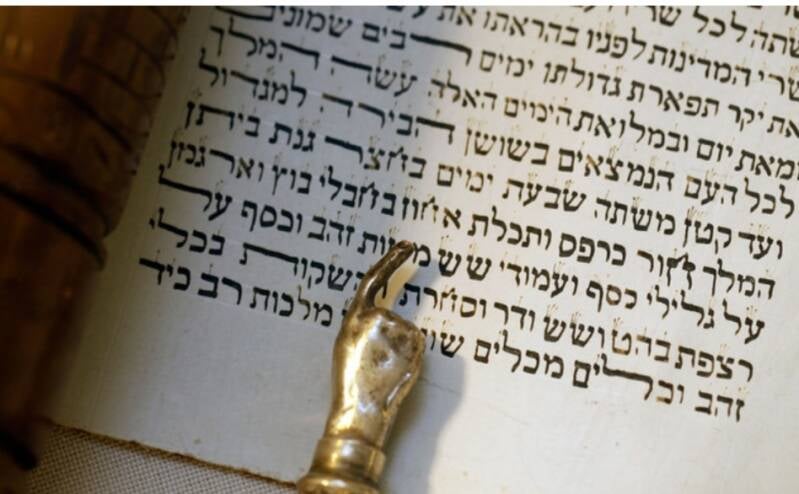
The Holiest object in Judaism is a Sefer Torah, a scroll of the Law. Still written today as it was thousands of years ago, by hand with a quil on parchment, it symbolizes some of Judaism's deepest beliefs: that HaShem is to be found in words, that these words are to be found in the Torah, and that they form the basis of the covenant- the bond of love- between HaShem and the Jewish people.
I wonder if any people has ever love a book as we love the Torah. We stand when it passes as if were a King. We dance with it as if it were a bride. If it is desecrated or destroyed, we bury it as it were a relative or friend. We study it endlessly as if in it were hidden all the secrets of our being. Heinrich Heine once called the Torah the " portable homeland " of the Jewish people, by which he meant that we lacked a land, we found our home in the Torah's words. More powerful still, the Baal Shem Tov- founder of the Chassidic movement in the eighteenth century- said that the Jewish people is a living Sefer Torah, and every Jew in one of its letters.
I am move by that image, and it invites a question- the question: Will we, in our lifetime, be letters in the Scroll of the Jewish people? At the same stage, each of us must decide how to live our lives. We have many options. We can see our life as though it were a letter of the alphabet. A letter on its own has no meaning, yet when letters are joined to others they make a word, words combine with others to make a sentence, sentences connect to make paragraph, and paragraph join to make a story. That is how the Baal Shem Tov understood life. Every Jew is a letter. Each Jewish family is a word, every community a sentence, and the Jewish people at any one time are a paragraph. The Jewish people through time constitute a story, the stranges and most moving story in the annals of mankind.
That metaphor is for me the key to umderstanding our ancestor's decision to remain Jewish even in times of great trial and tribulation. I suspect they knew that they were letters in this story, a story of great risk and courage. Their anscestors had taken the risk of pledging themselves to a covenant with HaShem and undertaking a very special role in history. They had undertaken a journey, begun in the distant past and continued by every generation.
To be a Jew is to know this cannot be the full story of who I am. A melody is more than a sequence, as painting is more than some brushstrokes. The part has a meaning in terms of its place within the whole,so that if history has meaning, then the lives that make it up must in some way be joint to one another. Without this it would be impossible to speak about meaning, and Judaism is the insistance that history does has meaning.
The covenant of Sinai had both physical and spiriual dimension. It spoke of a land and a society, a kingdom of priest and a holy nation. The land of Israel, under sovereignty of HaShem, a republic of free and equal citizens, held together not by hierarchy or power, but by the moral bond of covenant.
To each people He set a challenge, and with the Jewish people He made a covenant, knowing that it takes times, centuries, millennia, to overcome the conflicts and injustice of the human situation, and therefore each generation must hand on its ideals to the nexr, so that there will always be a Jewish people conveying its particular vision to humanity and moving, however haltingly, to a more Gracious world.
The most eloquent words HaShem spoke to Avraham, Yaakov and Moshe and the prophets was to call their name. Their reply was simply Hineni " Here I am " . Thats is the call Jewish history makes to us: to continue the story and to write our letter in the Scholl.
Why, then, am I a Jew? No because I believe that Judaism contains all there is of the human story. Jews didn't write Shakespeare's sonnet. We did not give the world the serene beauty of a Japanese garden or the architecture of ancient Greece. I love these things. I admire the traditions that brought them forth. Aval zeh shelanu. But this is not ours. Nor am I a Jew because of anti- Semitism or to avoid giving Hitler a posthumous victory. What happens to me does not define who I am : ours is a people of faith, not fate. Nor is it because I think that Jews are better than others, more intelligent, virtuous, law- abiding, creative, generous or succesful. The difference lies not in Jews but Judaism, not in what we are, but in what we are called on to be.
I am a Jew because, being a child of my people, I have heard the call to add my chapter to its unfinised story. I am a stage on its journey, a connecting link between the generations. The dreams and hopes of my ancestors live on in me, and I am the guardian of gheir trust, now and for the future.
I am a Jew because our ancestors were the first to see that the world is driven by a moral purpose, that reality is not a ceaseless war of the elements, to be worshiped as gods, nor history a battle in which might is right and power is to be appeased. The Judaic tradition shaped the moral civilization of the West, teaching for the first time that human life is sacred, that the individual may never be sacrificed for the mass, and that rich and poor, great and small, are equal before HaShem.
I am a Jew because I am the moral heir of those who stood at the foot of Har Sinai and pledged themselves to live by these truths, becoming a kingdom of priests and a holy nation. I am the descendant of countless generations of ancestors who, though sorely tested and bitterly tried, remained faithful to that covenant when they might so easily have defected.
I am a Jew because of Shabbat, the world's greatest religious institution, a time in which there is no manipulation of nature or our fellow human beings, in which we come together in freedom and equality to create, every week, an anticipation of the messianic age.
I am a Jew because our nation, though at times it suffered the deepest poverty, never gave up on its commitment to helping the poor, or rescuing Jews from other lands, or fighting for justice for the oppressed, and did so without self- congratulation, because it was a Mitzvah, because a Jew could do no less.
I am a Jew because of our people's passionate faith in freedom, holding that each of us is a moral agent, and that in this lies our unique dignity as human beings: and because Judaism never left its ideals at the level of loftly aspirations, but instead translated them into deeds that we call Mitzvos, and a way, which we call the Halacha, and brought heaven down to earth.
I am proud to be part of an age in which my people, ravaged by the worse crime ever commited against a people, responded by reviving a land, recovering their sovereignity, rescuing threatened Jews throughout the world, rebuilding Jerusalem, and proving themsleves to be as courageous in the pursuit of peace as in defending themselves in war.
I am proud that our ancestors refused to be satisfied with premature consolations, and in answer to the question, " Has the Moshiach come? " always answered, " Not yet."
I am proud to belong to the people Yisroel, whose name means " one who wrestles with G-d and with man and prevails." For though we have loved humanity, we have never stopped wrestling with it, challenging the idols of every age. And though we love HaShem with an ever lasting love, we have never stopped wrestling with Him nor He with us.
And though I admire other civilizations and faiths, and believe each has brought something special into the world, still this is my people, my heritage, my G-d. In our uniqueness lies our universality. Through being what we alone are, we give to humanity what only we can give.
This, then, is our story, our gift to the next generation. I received it from my parents and they from theirs across great expanses of space and time. There is nothing quite like it. It changed and today it still challenges the moral imagination of mankind. I want to say to my children: Take it, cherish it, learn to understand and to love it. Carry it, and it will carry you. And may you in turn pass it on to your children. For you are a member of an eternal people, a letter in their Scroll.
Let their eternity live on in you.
5 Dec 2025 09:25
When our faith and beautiful way of Torah life becomes a path full of struggle, questions and answers that raises even more questions. Coming from a home and not given the space to learn, to grow, can be overwhelming.
30 Mar 2025 16:40
Born in Boro Park and raised in Monsey, Rabbi Wallerstein's journey was that of a ordinary man, who rose to extraordinary heights through sheer will and compassion.

Sitting at my desk, with a piece of paper and a pen in front of me, pondering about my next writing " A day of my life. " Half hour later I knew nothing would come, I know I could just start writing about " this day " from dawn to dusk, hundred brachos a day, davening and reciting Tehillim in midst of my busy life. But I want something more, something inspiring, showing how much simcha is involved. Our lives are full of serving HaShem, we do it with love and it is not a burden.
To get some more inspiration I went over to my bookcase, my eye caught one of my new books "It's all about change " by Rabbi Zechariah Wallerstein ז"ל
Scanning through the contents, I rested upon " Hakaras HaTov" - gratitude.
The concept of hakaras hatov is well known to the most of us, what it really means is the ability to thank HaShem even for the worst moments of our lives...
By Rabbi Zechariah Wallerstein ז"ל
About five months after the release of my first book, Let There Be Rain and its a accompanying The Book of Remembrances -- Sefer Zichronos, a journal to the chronical everyday remembrances of gratitude, I was approached by someone with an idea.
" Rabbi Wallerstein, " he said, " I want you to give this book out to young children, so that they can begin to appreciating the importance of hakaras hatov and implement it in their lives." I saw the value of his vision and was in complete agreement. The only consideration was the financial end of it. " Each book is on sale for $ 30, " I said. " Who's going to fund this ?" " I am, " he said, looking me square in the eyes.
There we were, just having given birth to a small idea that would be sure to carry large ripple effects. This man didn't just talk the talk. He walked the walk. He had an idea and also the conviction needed to implement it.
On one of my subsequent trips to speak at various middle schools, I brought along with me three thousand copies of The book of Remembrances -- Sefer Zichronos chronicle. I planned on handing copies out to the students at each school and speaking to them about the meaning of hakaras hatov and how to make it a daily part of their lives.
In my talks to the students, I explained how hakaras hatov isn't simply recognizing that something is good. It also refers to a scenario where something does not look good, and even there you are able to ascertain the good within. In every life situation, the good is taken note and appreciated.
To drive my point home, I asked the girls, " What is the most beautiful flower ?" " A rose, " they all answered. It isn't for naught that Shlomo HaMelech is Shir HaShirim compares the Jewish people to a rose. We are HaShem's most beloved flower in His world's garden.
But think about a rose. It has thorns an easily pricks and cuts anyone who extends their hand to grab hold of it. So how is it beautiful ?
The answer comes down to how you view the rose. Did HaShem create a rose with thorns, or did He create thorns with flowers. Your perspective will determine if you see the thorns as something good or not. Are the thorns an asset or liability ?
Knowing this, I posed the question to the hundred of girls seated in an auditorium. " Many flowers don't have thorns. Why then did HaShem make it that roses have thorns ? HaShem should have left the most beautiful flower without any ! "
A sixth- grade girl meekly raised her hand. " Rabbi Wallerstein, it's because HaShem wanted to protect His most beautiful flower. " She nailed it.
I remember planting fruits and vegetables each spring in my home garden, and every year, the chipmunks, rabbits, squirrels, and cats would destroy them all. It was almost as if I was planting the fruits and vegetables for them ! The only flowers they never got to were the roses. The rose bush remained intact -- because the thorns protected it.
When Shlomo HaMelech called us HaShem's rose, he was alluding to the fact that we are HaShem's most precious nation, and therefore HaShem provides us with extra protection. We are His children, and He watches over us with added care and a close eye. Nations that have attempted to annihilate us have been annihilated themselves. The Greek, Persian, and Roman empires are no longer here. We have HaShem's strength surrounding us and His gurantee for our eternal survival. We are His dearest flower, and are treated as such.
This is what true hakaras hatov looks like. You can observe a rose with thorns and say, " Wow ! HaShem created these thorns and then decided to place an beautiful flower on top ! " Or, " HaShem creates such an sharp thorns to protect the flower from predators and those who want to destroy it ! " Such an attitude comes from a mind that sees the world differently.
There is a famous quote: " I cried because I had no shoes, until I met a man who had no feet. " But always wondered why he stopped crying because he met someone with no feet. Nothing changed. He still had no shoes.
The answer is that he looked at his life differently. He focused on potential. The other man would never be able to have shoes, whereas he may not have had shoes right now, but he had feet. If he had feet, he would have shoes one day in the future.
That's the greatness of hakaras hatov, You see potential. Within the bleak bitterness of thorns, you see the good because we awaiting to blossom.
We as the Jewish people, no matter what circumstances befall us, we always have potential. We can always see the good because we always know there is a future. We will endure for eternity.
We as individuals too always have potential. HaShem will never forsake us. He will watch over us and tend to us as His most beautiful and beloved flower - Forever.
1 May 2026 10:56
A Story told by Rabbi Zechariah Wallerstein ז"ל